Jaw Surgery

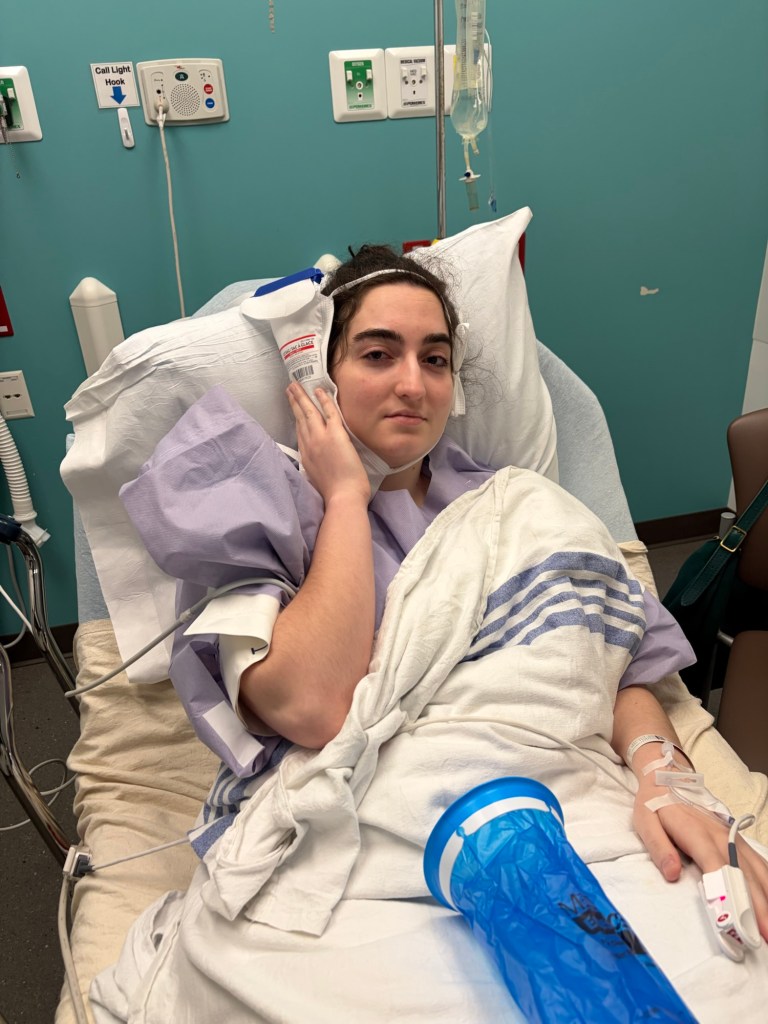
This is me coming to from anesthesia.

Thank you for praying for me. The jaw surgery went very well with no complications, and I was able to go home the same day. About 5½ months ago, I yawned and my jaw popped and became stuck open. I was able to force my mouth closed (I know now not to do that in the future 😅). I went to the dentist, my doctor, and an ENT, but they all told me it was outside their specialties. I’ve only been able to open my mouth about one and a half fingers wide. It’s a type of locked jaw.


It wasn’t as bad, but a few years ago I had something similar happen to my jaw (also from a yawn) and was sent to an oral surgeon at OHSU. Since it was still within the timeframe, I was able to see the same oral surgeon as before. He measured my jaw opening, which was much more restricted this time. He knew exactly what the problem was and how to fix it with a relatively small procedure. I told him I was so happy he had a plan because I wasn’t sure who I would go to next. He smiled and replied that he was it.


The surgery has an over 80% success rate, but it really needs to be done within six months to work best. Insurance wasn’t helpful, so I pushed to get in about three months into this and had the surgery at 5½ months. It was close, but getting in felt like an answered prayer. I’m very hopeful it will work. The surgeon told me he has never had to repeat one of these procedures.


Here’s what they did: I was placed under sedation rather than general anesthesia because the surgery was only about 30 minutes. Anesthesia didn’t want to risk the complications of putting me fully under, especially since I would have needed intubation and my mouth wasn’t opening all the way. There was a lot of logistics involved because of my medical history—I’m allergic to some medications they use with anesthesia, and the fusion in my neck (plus the hardware) made them extra cautious. If there had been an emergency need to intubate, they had a special “blade” type tool ready. I didn’t ask for more details on that one.


The plan was to start with sedation. The surgeon told me I would be asleep and wouldn’t remember anything. But when his team came in, they said I would be awake enough to be aware, talk with them, and respond. I really didn’t want to be awake, remember anything, or feel any pain. They promised they would watch my body for signs of distress and adjust the medications as needed.


It was a minor surgery, so it was just my mom and me at the hospital. We prayed together before leaving the house. I had no idea what to expect because I’m used to much higher-stress, more complicated surgeries. We thought it would be easier with fewer people there so it wouldn’t be as triggering for me. I wasn’t prepared for the whole team coming into my room at different times for introductions. It makes sense that it’s standard procedure, but it brought up a lot of emotions and made the two hour wait in the prep area feel agonizing.


When I was finally taken back to the surgical room, I was more than ready. They tucked me in with warm blankets and gave me the anesthesia. The surgeon explained that they were going to take really good care of me. He said it was a simple procedure compared to the surgeries he usually does and that my jaw would have relief soon.


They inserted two needles into my jaw joint, drained the inflammatory fluid, and irrigated it to cleanse the joint. Then he dislocated my jaw and repositioned it correctly. The joint was filled with saline to keep it in place because it was misshapen. The surgeon told me to think of it like a balloon that needed to be refilled. Finally, he injected a steroid into the joint to help with swelling. So in the end, I just have two small needle marks by my ear and a very tender mouth from all the stretching and repositioning.


A few weeks before surgery, the surgeon squeezed me into his schedule and gave me a steroid injection in the joint to help with the pain while waiting. It took the edge off, but I still couldn’t open my mouth much. A week before surgery, I could feel it starting to wear off.


I remember waking up in a room with a box of tissues in my lap, weeping. I’ve never come out of anesthesia without turning into an emotional wreck. I get super gushy and love everyone. Once I became aware of what I was saying, I was crying to my mom about how nice everyone had been. When I got my bearings, she took the tissue box away and we laughed. We’ve been through this six times now—wisdom teeth, tonsil removal, and brain surgeries.


I had to stay in the hospital a few extra hours to get my pain under control. When I came home, a dear family friend had a homemade dinner waiting. I ate some cake, fell asleep on the couch, then woke up later and had some pasta. I’m on a very soft food diet for the next two weeks and doing a ton of icing on my jaw. The doctor said ice will bring the most relief.


The theory is that having C1 removed and not fused, with undiagnosed hEDS led to instability in my neck. Then four months in the the full cervical collar neck brace caused my neck muscles to weaken, which threw my jaw out of place. The oral surgeon told me this is a common issue for young women with hEDS.
I’ve also been having horrible vertigo—worse than I’ve ever experienced. I went to the ER a couple of weeks ago, where they did scans and gave me some meds. I’ve had the Epley Maneuver (or as they call it, the “Barbecue Maneuver”) done three times now, and it has helped significantly. It’s hard to know whether the vertigo is coming from my jaw, my neck, migraines, the loose crystals in my ears, or all of the above—it’s all tangled together.

Hopefully my body starts to calm down and the symptoms ease up. I’ve also had very blurry vision and double vision, so I’m in the process of getting a referral to the Casey Eye Institute for a neuro-ophthalmology evaluation.


It’s been a rough few months with a lot of pain and having to adapt to life with very limited jaw movement. But as soon as I woke up from surgery, I could open my mouth almost normally again. It’s still swollen and aggravated (there may be some saline still trapped from the flushing), but as it heals I should get even more movement. I was expecting a lot of bruising and maybe scabs, but you can’t even see anything. I just have a small Band-Aid. It feels like a tender mosquito bite. I threw up last night from pain, but sleeping with an ice pack is making it manageable.


There are so many things to be thankful for these last few months: being able to call my Uncle Frank (a retired dentist), who helped us make a plan and get on the right path; so many church family and friends praying; and a home-cooked meal waiting when we got home. 💗
It’s been a hard-won lesson, but there’s always joy and peace to be found in the waiting—whether you’re waiting for healing, surgery, or something else that causes that deep longing in your heart. God is always there. I’ve said so many prayers that felt like echoes of previous ones, like I was knocking on a worn-out door in Heaven. But even when the wait is long or the answer doesn’t come right away or in the way we expect, God is walking with us through this complicated journey we call life. Lately, the story of the Shepherd and the 99 has been rattling around in my mind—maybe because I’ve felt like that one lost sheep. Not by choice, but because of circumstances.

Chronic Illness can cut you off from what you know. It robs you of your strength and makes the simplest things, like getting ready to leave the house, feel like mountains. It’s isolating. It’s giving me time to know my Shepherd. For when I walk through the Valley of the Shadow He is still with me.

Blessings,

Shae

Psalm 23

Two Months Post-Op: Prayers, Delays, and The Surgeon’s Good News

Thank you everyone for praying for my appointment with the neurosurgeon in Colorado. The prayers were needed. Travel was hard on my body.

We flew Sunday and rested Monday. Tuesday was appointment day. We were up at 4:30 a.m. our time to take a Lyft to the clinic across from the hospital for x-rays. It had to be done early so the radiologist could read it and send it to the surgeon to review before our appointment. Usually, I would get the scans done here and send them over ahead of time, but the office missed it.

After that, we walked to Starbucks to wait three hours for the neurosurgery appointment. We spent the time organizing my symptoms, notes, my questions, and questions from my physical therapists and neurologist.

After sitting in Starbucks for hours, we finally went across the street to the hospital. When we walked into the clinic, the receptionist turned around and called for a nurse. The nurse ran around the corner and said the surgeon was called into emergency surgery and I would need to come back on Thursday.

Right away, my mom and I said in unison, “We flew from Washington.” There was a scurry around the corner, and we waited a few minutes for a nurse to come and say that we could come back at 3:30.

We went back outside and had to figure out what to do while we waited. We didn’t want to take another Lyft just to come back later. We walked around a bit and then ended up back at Starbucks. It became a very long and exhausting day. I thought it would take up the morning and early afternoon, and then I would have time to rest before we traveled back home.

Finally, the time came to meet with the neurosurgeon. He is pleased with my progress. My scar is healing very well. The x-rays show that all the screws are in place and exactly where they need to be. We talked through my symptoms and how to treat or monitor them. We talked through the scary symptoms that sent me to the ER at OHSU. He had a fresh take and thinks they are related to post-surgical complications, not nerve damage. Most of the symptoms, he thinks, can be managed by medication and physical therapy. It was really good news and an answer to my prayer. Thank you everyone for praying with me for healing and through this very stressful time.

This is the most recent x-ray I had done in Colorado. The curving in my neck is from surgery and being in the brace. The brace is to keep those screws in place, while they solidify into place. I will do physical therapy in the future to strengthen and straighten the neck. The second screw going down is the one that gives me chills to look at 😬

I’m now able to lift 10 pounds and can start weaning off the neck brace. My neck muscles are very weak, so it’s going to be a slow process. The brace has a knob in the front that you can pull up and twist to adjust it up or down. Right now, the brace is supporting my head. During the day, I’m going to start turning the knob to make it loose, and then when my neck gets fatigued, adjust it back up (beginning with 2–5 minutes).

When my neck gets a little stronger and used to holding itself up again, I’m going to move to a soft collar, which doesn’t support your head as much but still protects it. Eventually, I will work to one of those travel pillows—not for support, but to keep my head movements in range.

Physical therapy is starting slow. I’m going for walks daily with my walker. 5 minutes out and 5 minutes back. There is also therapy for my eyes. I have a popsicle stick with the letter “A” on it. I hold it out in front of me and pull it toward me until it blurs, then I restart for a few sets. Then I do the same thing sideways. It’s going to be a long time to build up strength—especially since I was so deconditioned before this surgery, plus the other two surgeries. My body is weak, and this next year feels daunting. I probably have two years of 4–5 therapy appointments per week in front of me once I work up to them all. That will include balance/neck therapy, POTS protocol, speech/cognitive therapy, occupational therapy (handwriting, grip), and strain-counterstrain therapy. They almost all come with homework too.

I asked the surgeon how much longer he expected my pain to last and how high it should be. My pain is still incredibly high. My mom keeps a schedule and wakes me up throughout the night to stay ahead of the pain. I still wake up multiple times a night in pain, and there’s usually a point in the day I can feel myself wanting to slip into a meltdown like a child because the pain gets so bad it feels like I can’t talk. The surgeon said he absolutely expects it to be that high right now. He said to expect the pain to come down and feel better by the 6-month mark.

At 12 weeks, in December, I’m going to have a CT to check the bone graft and make sure it is still in place. That will also be when I have another check-in with the surgeon virtually.

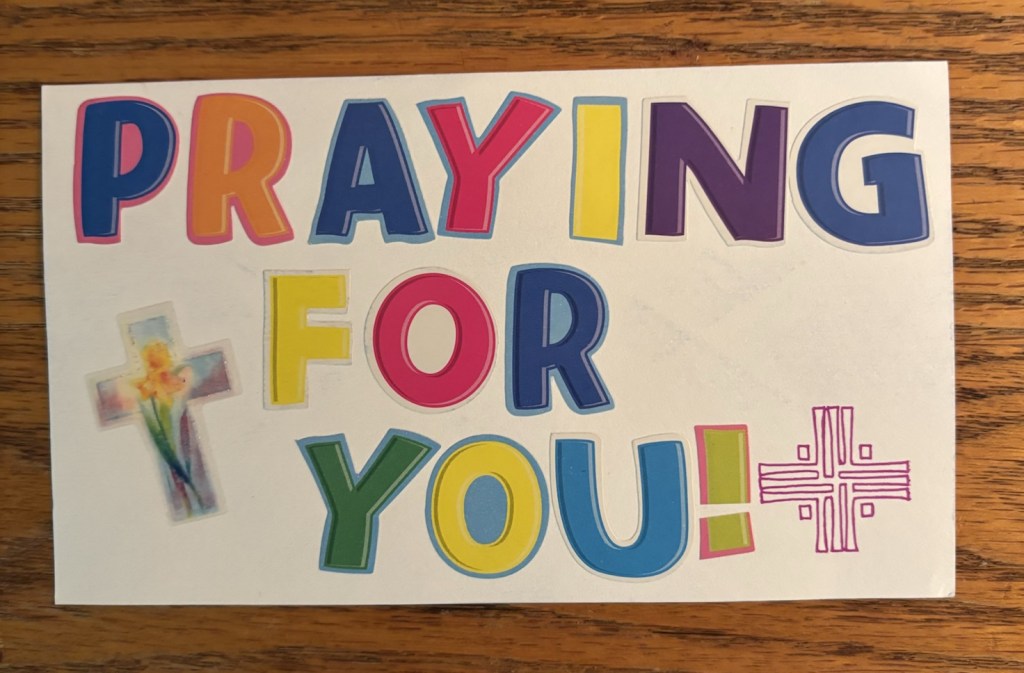
These last few weeks felt so turbulent and so exhausting. I have a long way to go, but I made it past the two-month mark. I’m so grateful for all the prayers and messages. I received messages of prayers and encouragement in the moments I needed them the most. I came home to a gift from a friend and a card from an unknown sender. I don’t know who sent the card or how you got my address, but thank you so much for the card and encouragement.

The last month has been about surviving, and I haven’t been up to responding much, but thanks for all the love and support. 💜

Shae

Whoever sent this card to me, thank you so much, for your thoughtfulness. I received it the day I got home and it warmed my heart.

My Lament

Hello everyone! This post is going to be a little different. I don’t have any big health updates or huge prayer requests. Many people ask me how I am and how I am really doing. That is a hard question for me to answer. I usually reply, “I’m fine” to keep it simple. Recently, I’ve begun to reflect on why it is so hard to answer that question.

I started this blog to post group updates to save time. Then I caught a glimpse of the dark chronic illness world, on social media, and decided to also use this blog to bring some hope to others who are struggling with chronic health problems. As I’ve shared my health struggles and some of the fallout from my diagnosis, I’ve tried to keep it in a somewhat positive light. While sincere, that is only part of my story.

Here’s my honest answer for, “how are you? These are some of my late night thoughts that loop in my head.

There is a heavy grief I carry around with me: the grief of the diagnosis, the grief of brain surgery, and the grief of exile. The hope of life being “normal” followed by the disappointment of a failed brain surgery, more complications, and then a second brain surgery with its continuing fallout. The grief has been hitting me hard. I’m sad for the life I lost and the future that will never be, I’m angry over that loss and I’m angry that I feel so off kilter. 

After my first surgery, I started therapy to talk through the trauma of the diagnosis and surgery. I learned that when someone is faced with a heavy medical diagnosis they go through the same stages of grief they would if someone died. Denial, anger, bargaining, depression, and acceptance.

  1. Denial That gut wrenching feeling of shock. Not being able to wrap your head around it. Pretending it’s not there or not that bad and trying to convince yourself there’s an easy fix or maybe pretend it doesn’t exist.
  2. Anger: I felt a little angry in the beginning, but I think I was in shock until I was wheeled into the operating room. Initially I felt like the rug had been pulled out from under me. But I’ve been feeling the anger more. I was told I would return to college and work after four months. I’m still waiting. It’s been four years and the path back is still not clear. So many “whys?” “Why is this going on so long?” When I had my second surgery the question was, “why do I have to go through this again?” “When do I get my life back?” I felt and still do feel anger at the medical establishment for how slowly things move and things getting missed. I am frustrated with the slow healing and my body that seems to have a will separate from my own. Wrestling with God’s timing being so different from my own. Deep in the late nights when my insomnia won’t let me sleep, all the questions, fears, and doubts come to a boiling point and I feel like I’m about to be crushed under the weight of it all. Why has this gone on so long? Where is the healing? Why are there so many unanswered prayers?
  3. Bargaining I’ve definitely had my fair share of “I’ll do anything” and countless prayers of pleading “what ifs?” or “if only.” I could do so much more if I wasn’t sick.
  4. Depression This one is a little tricky for me. This was my initial diagnosis when the doctors didn’t know what was happening so just threw that label on me. This one is harder for me to acknowledge, but come on, I’ve had two brain surgeries, it’s there.
  5. Acceptance There are times when I feel like I’ve accepted this whole thing and I feel a sense of peace. This is my life now and I am establishing how to cope and live with it. I see all the blessings in my life and how the Lord has carried me through all these trials.

Something I’ve learned about grieving is that you don’t always go through the stages in order. Or you can work through one stage and feel like you have moved past it only to cycle through them all again. You will run through the cycle multiple times. 

Before my second surgery and before I knew the first one failed, my therapist told me that I hadn’t allowed myself to lament. That I needed to let myself feel the grief. She encouraged me to do what King David did and call to mind all the good things and the ways God has been good to me. The prophet Jeremiah also did this in the book of Lamentations 3:19-23,

 “I remember my afflictions and my wondering, the bitterness and the gall. I well remember them, and my soul is downcast within me. Yet, this I call to mind and therefore I have hope: Because of the LORD’s great love we are not consumed, for his compassions never fail. They are new every morning; great is your faithfulness.

It’s hard for me to admit the struggle and the internal battle because I don’t want to drown in negativity and bitterness. That would be a pretty easy ocean to drift in. There are times where my faith is tested and times where I feel so weary that I feel I have nothing left in me. There’s a part of me I recognize as sometimes fronting it, that denial stage, and I just want everything to be what it was and “normal.” Then there are the moments of anger, when I feel the world moving on without me. 

I read a quote recently from C.S. Lewis,

I sat with my anger long enough, until she told me her real name was grief.

That was the lightbulb moment where I realized that this restlessness that I can’t quite put my finger on is grief. Grief over my diagnosis, multiple brain surgeries, endless recovery, all the fall out in my close relationships and grieving the life I lost to this illness. 

But I’ve also learned the Bible is a book of suffering. Oftentimes, we tend to focus more on the victory we have in Christ and the celebration and neglect the parts of suffering. Jesus himself was described as a man of sorrows acquainted with the deepest of grief. He cried out on the cross in his final moment,

“My God, My God, why have you forsaken me?” (Mark 15:35)

I’ve begun to try and model some of my journal entries like David’s laments in the book of Psalms. To bring my troubles and anguish to God. All of it. The hurt, the anger and sorrow, and then to write about what I know to be true of the Lord’s character. The tender mercies in my life. I’m definitely struggling. Adjusting my view on how my life would go and changing my expectations.  My schedule stays the same each week. Four days of physical therapy plus any additional scans or appointments. Then the rest of the week I am at home resting and managing my symptoms as they come and physically recovering from my PT workouts. I can feel pretty isolated and cut off from the “rest of the world.” I feel lonely and I struggle with wanting to do more, but still being limited by my symptoms. Sometimes, everything just feels monotonous, even my prayers. It’s hard to admit that. 

I realized I can’t keep waiting for some big shift or change to happen in my life. I feel like I’m always waiting for something barely in the distance that I can’t quite see that will change my life. I guess I’m starting to work towards the “acceptance” part. So, perhaps that is a prayer request.

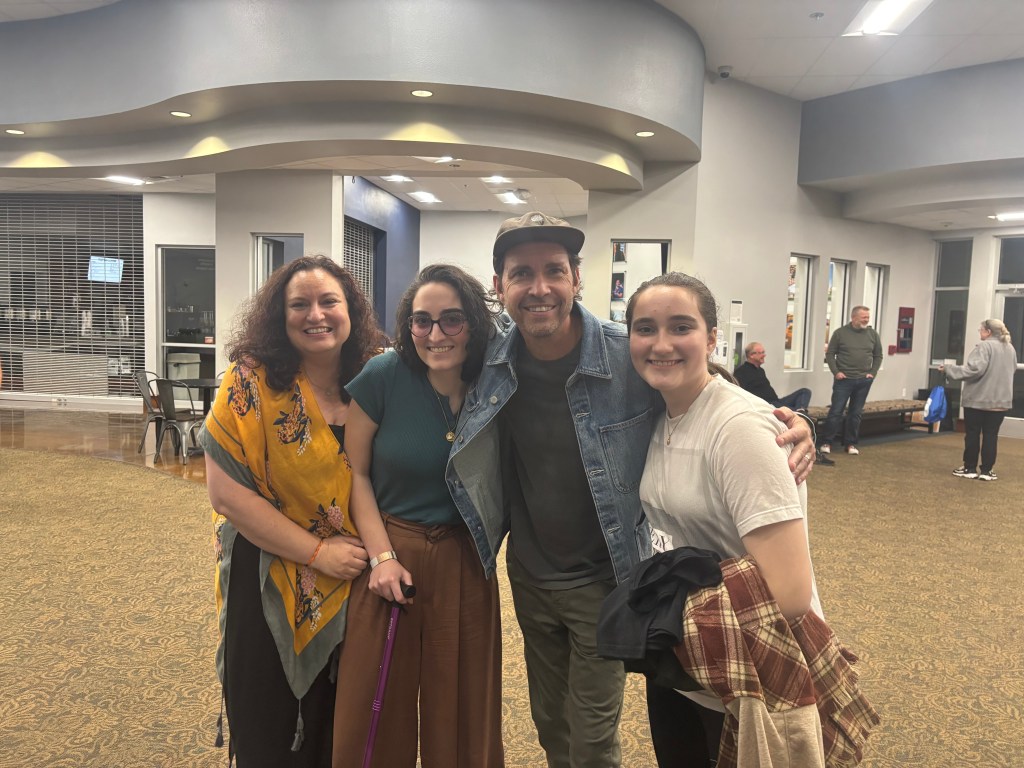
Recently, I went to a concert and did my usual concert preparations by googling all the artists and listening to their music. I found a song that hit so close to my heart that I had to pause it and breathe. It beautifully and hauntingly articulates the sorrow and grief of loss. The struggle of believing, but lamenting the loss. The song is called, “Nowhere to Be Found,” by Australian Christian singer/songwriter Nathan Tasker. After the concert we were able to meet Nathan Tasker and talk with him about his song and the impact its made on me and my family.  

I took a fall with no safety net
I felt my face hit the ground
After a second to catch my breath
I felt you kick me when I was down

Losing a loved one is hard enough
Three pushed it over the edge
So I carried the footprints of my daughter and son
To the place where they say you live

But you were nowhere to be found
Nowhere to be found

When the long line of dinners came to an end
We made a meal of our own
Out of cold habit we both bowed our heads
And felt the silence of our home

Where you were nowhere to be found
Nowhere to be found
Nowhere to be found

Am I not shouting loud enough?
Is there more than the top of my lungs?
Oh I used to feel your love
Where has it gone?
Nowhere to be found

Now I look at the world like a crystal ball
Usually from the outside in
I see people I love get the life that I lost
And I try to be happy for them
But it feels like a town unacquainted with grief
Protected like a child in the womb
Oh but looking for you hanging around on those streets
Is like looking in your tomb

Where you were nowhere to be found
Nowhere to be found
Nowhere to be found
Nowhere

This song says everything I can’t. The parts of my grief that I am still processing and don’t have the words to describe. The doubts of where is God in all of this? The pain of watching those you love move on while you feel stuck and hollow. I love the part of feeling like you’re in a town acquainted with grief and the comparison of how looking for Jesus there is like looking in His tomb, where He was nowhere to be found.

There’s still an empty tomb and there’s still joy and new mercies that come in the morning. That is the pattern of lament. You address God, issue a complaint, a request, and then an expression of praise or trust in Him. We pour out our hearts – all our grief, anger, and sadness- to our God who listens and cares. We turn to him in our sorrow and then conclude with the hope of what we know is true of Him and His character. Lament turns us towards God while our grief and sorrow tries to pull us away. But, we know that God loves us and this life and its troubles are not the end for us.

Your Sister in Christ,
Shae