Thank you everyone for praying for my appointment with the neurosurgeon in Colorado. The prayers were needed. Travel was hard on my body.
We flew Sunday and rested Monday. Tuesday was appointment day. We were up at 4:30 a.m. our time to take a Lyft to the clinic across from the hospital for x-rays. It had to be done early so the radiologist could read it and send it to the surgeon to review before our appointment. Usually, I would get the scans done here and send them over ahead of time, but the office missed it.
After that, we walked to Starbucks to wait three hours for the neurosurgery appointment. We spent the time organizing my symptoms, notes, my questions, and questions from my physical therapists and neurologist.
After sitting in Starbucks for hours, we finally went across the street to the hospital. When we walked into the clinic, the receptionist turned around and called for a nurse. The nurse ran around the corner and said the surgeon was called into emergency surgery and I would need to come back on Thursday.
Right away, my mom and I said in unison, “We flew from Washington.” There was a scurry around the corner, and we waited a few minutes for a nurse to come and say that we could come back at 3:30.
We went back outside and had to figure out what to do while we waited. We didn’t want to take another Lyft just to come back later. We walked around a bit and then ended up back at Starbucks. It became a very long and exhausting day. I thought it would take up the morning and early afternoon, and then I would have time to rest before we traveled back home.
Finally, the time came to meet with the neurosurgeon. He is pleased with my progress. My scar is healing very well. The x-rays show that all the screws are in place and exactly where they need to be. We talked through my symptoms and how to treat or monitor them. We talked through the scary symptoms that sent me to the ER at OHSU. He had a fresh take and thinks they are related to post-surgical complications, not nerve damage. Most of the symptoms, he thinks, can be managed by medication and physical therapy. It was really good news and an answer to my prayer. Thank you everyone for praying with me for healing and through this very stressful time.
This is the most recent x-ray I had done in Colorado. The curving in my neck is from surgery and being in the brace. The brace is to keep those screws in place, while they solidify into place. I will do physical therapy in the future to strengthen and straighten the neck. The second screw going down is the one that gives me chills to look at 😬
I’m now able to lift 10 pounds and can start weaning off the neck brace. My neck muscles are very weak, so it’s going to be a slow process. The brace has a knob in the front that you can pull up and twist to adjust it up or down. Right now, the brace is supporting my head. During the day, I’m going to start turning the knob to make it loose, and then when my neck gets fatigued, adjust it back up (beginning with 2–5 minutes).
When my neck gets a little stronger and used to holding itself up again, I’m going to move to a soft collar, which doesn’t support your head as much but still protects it. Eventually, I will work to one of those travel pillows—not for support, but to keep my head movements in range.
Physical therapy is starting slow. I’m going for walks daily with my walker. 5 minutes out and 5 minutes back. There is also therapy for my eyes. I have a popsicle stick with the letter “A” on it. I hold it out in front of me and pull it toward me until it blurs, then I restart for a few sets. Then I do the same thing sideways. It’s going to be a long time to build up strength—especially since I was so deconditioned before this surgery, plus the other two surgeries. My body is weak, and this next year feels daunting. I probably have two years of 4–5 therapy appointments per week in front of me once I work up to them all. That will include balance/neck therapy, POTS protocol, speech/cognitive therapy, occupational therapy (handwriting, grip), and strain-counterstrain therapy. They almost all come with homework too.
I asked the surgeon how much longer he expected my pain to last and how high it should be. My pain is still incredibly high. My mom keeps a schedule and wakes me up throughout the night to stay ahead of the pain. I still wake up multiple times a night in pain, and there’s usually a point in the day I can feel myself wanting to slip into a meltdown like a child because the pain gets so bad it feels like I can’t talk. The surgeon said he absolutely expects it to be that high right now. He said to expect the pain to come down and feel better by the 6-month mark.
At 12 weeks, in December, I’m going to have a CT to check the bone graft and make sure it is still in place. That will also be when I have another check-in with the surgeon virtually.
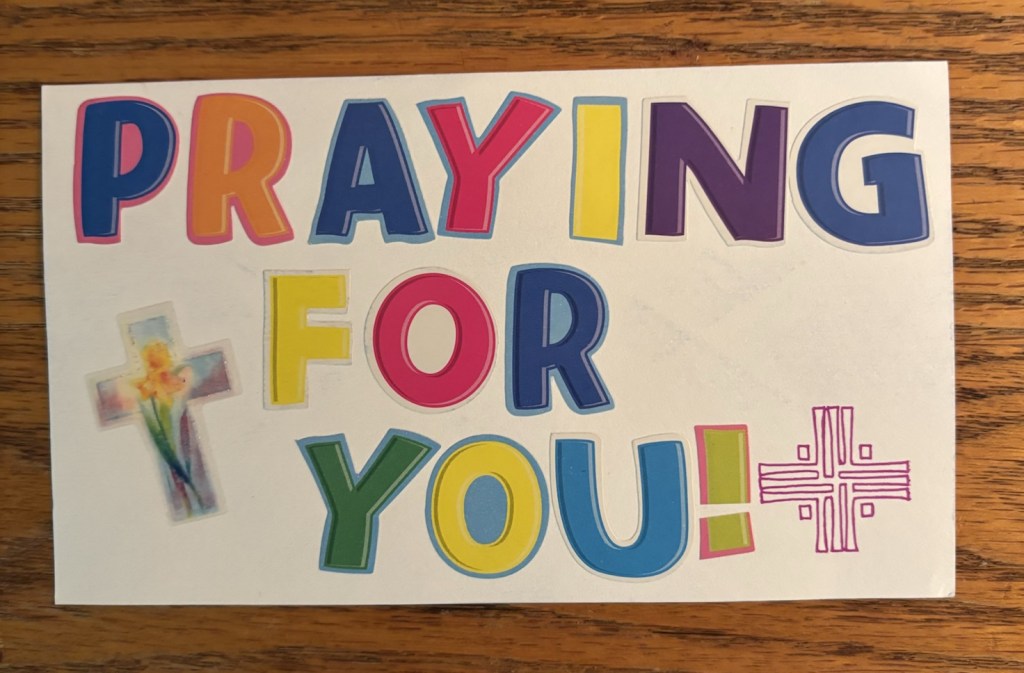
These last few weeks felt so turbulent and so exhausting. I have a long way to go, but I made it past the two-month mark. I’m so grateful for all the prayers and messages. I received messages of prayers and encouragement in the moments I needed them the most. I came home to a gift from a friend and a card from an unknown sender. I don’t know who sent the card or how you got my address, but thank you so much for the card and encouragement.
The last month has been about surviving, and I haven’t been up to responding much, but thanks for all the love and support. 💜
Shae
Whoever sent this card to me, thank you so much, for your thoughtfulness. I received it the day I got home and it warmed my heart.
Hello everyone! This post is going to be a little different. I don’t have any big health updates or huge prayer requests. Many people ask me how I am and how I am really doing. That is a hard question for me to answer. I usually reply, “I’m fine” to keep it simple. Recently, I’ve begun to reflect on why it is so hard to answer that question.
I started this blog to post group updates to save time. Then I caught a glimpse of the dark chronic illness world, on social media, and decided to also use this blog to bring some hope to others who are struggling with chronic health problems. As I’ve shared my health struggles and some of the fallout from my diagnosis, I’ve tried to keep it in a somewhat positive light. While sincere, that is only part of my story.
Here’s my honest answer for, “how are you? These are some of my late night thoughts that loop in my head.
There is a heavy grief I carry around with me: the grief of the diagnosis, the grief of brain surgery, and the grief of exile. The hope of life being “normal” followed by the disappointment of a failed brain surgery, more complications, and then a second brain surgery with its continuing fallout. The grief has been hitting me hard. I’m sad for the life I lost and the future that will never be, I’m angry over that loss and I’m angry that I feel so off kilter.
After my first surgery, I started therapy to talk through the trauma of the diagnosis and surgery. I learned that when someone is faced with a heavy medical diagnosis they go through the same stages of grief they would if someone died. Denial, anger, bargaining, depression, and acceptance.
Denial That gut wrenching feeling of shock. Not being able to wrap your head around it. Pretending it’s not there or not that bad and trying to convince yourself there’s an easy fix or maybe pretend it doesn’t exist.
Anger: I felt a little angry in the beginning, but I think I was in shock until I was wheeled into the operating room. Initially I felt like the rug had been pulled out from under me. But I’ve been feeling the anger more. I was told I would return to college and work after four months. I’m still waiting. It’s been four years and the path back is still not clear. So many “whys?” “Why is this going on so long?” When I had my second surgery the question was, “why do I have to go through this again?” “When do I get my life back?” I felt and still do feel anger at the medical establishment for how slowly things move and things getting missed. I am frustrated with the slow healing and my body that seems to have a will separate from my own. Wrestling with God’s timing being so different from my own. Deep in the late nights when my insomnia won’t let me sleep, all the questions, fears, and doubts come to a boiling point and I feel like I’m about to be crushed under the weight of it all. Why has this gone on so long? Where is the healing? Why are there so many unanswered prayers?
Bargaining I’ve definitely had my fair share of “I’ll do anything” and countless prayers of pleading “what ifs?” or “if only.” I could do so much more if I wasn’t sick.
Depression This one is a little tricky for me. This was my initial diagnosis when the doctors didn’t know what was happening so just threw that label on me. This one is harder for me to acknowledge, but come on, I’ve had two brain surgeries, it’s there.
Acceptance There are times when I feel like I’ve accepted this whole thing and I feel a sense of peace. This is my life now and I am establishing how to cope and live with it. I see all the blessings in my life and how the Lord has carried me through all these trials.
Something I’ve learned about grieving is that you don’t always go through the stages in order. Or you can work through one stage and feel like you have moved past it only to cycle through them all again. You will run through the cycle multiple times.
Before my second surgery and before I knew the first one failed, my therapist told me that I hadn’t allowed myself to lament. That I needed to let myself feel the grief. She encouraged me to do what King David did and call to mind all the good things and the ways God has been good to me. The prophet Jeremiah also did this in the book of Lamentations 3:19-23,
“I remember my afflictions and my wondering, the bitterness and the gall. I well remember them, and my soul is downcast within me. Yet, this I call to mind and therefore I have hope: Because of the LORD’s great love we are not consumed, for his compassions never fail. They are new every morning; great is your faithfulness.
It’s hard for me to admit the struggle and the internal battle because I don’t want to drown in negativity and bitterness. That would be a pretty easy ocean to drift in. There are times where my faith is tested and times where I feel so weary that I feel I have nothing left in me. There’s a part of me I recognize as sometimes fronting it, that denial stage, and I just want everything to be what it was and “normal.” Then there are the moments of anger, when I feel the world moving on without me.
I read a quote recently from C.S. Lewis,
“I sat with my anger long enough, until she told me her real name was grief.“
That was the lightbulb moment where I realized that this restlessness that I can’t quite put my finger on is grief. Grief over my diagnosis, multiple brain surgeries, endless recovery, all the fall out in my close relationships and grieving the life I lost to this illness.
But I’ve also learned the Bible is a book of suffering. Oftentimes, we tend to focus more on the victory we have in Christ and the celebration and neglect the parts of suffering. Jesus himself was described as a man of sorrows acquainted with the deepest of grief. He cried out on the cross in his final moment,
“My God, My God, why have you forsaken me?” (Mark 15:35)
I’ve begun to try and model some of my journal entries like David’s laments in the book of Psalms. To bring my troubles and anguish to God. All of it. The hurt, the anger and sorrow, and then to write about what I know to be true of the Lord’s character. The tender mercies in my life. I’m definitely struggling. Adjusting my view on how my life would go and changing my expectations. My schedule stays the same each week. Four days of physical therapy plus any additional scans or appointments. Then the rest of the week I am at home resting and managing my symptoms as they come and physically recovering from my PT workouts. I can feel pretty isolated and cut off from the “rest of the world.” I feel lonely and I struggle with wanting to do more, but still being limited by my symptoms. Sometimes, everything just feels monotonous, even my prayers. It’s hard to admit that.
I realized I can’t keep waiting for some big shift or change to happen in my life. I feel like I’m always waiting for something barely in the distance that I can’t quite see that will change my life. I guess I’m starting to work towards the “acceptance” part. So, perhaps that is a prayer request.
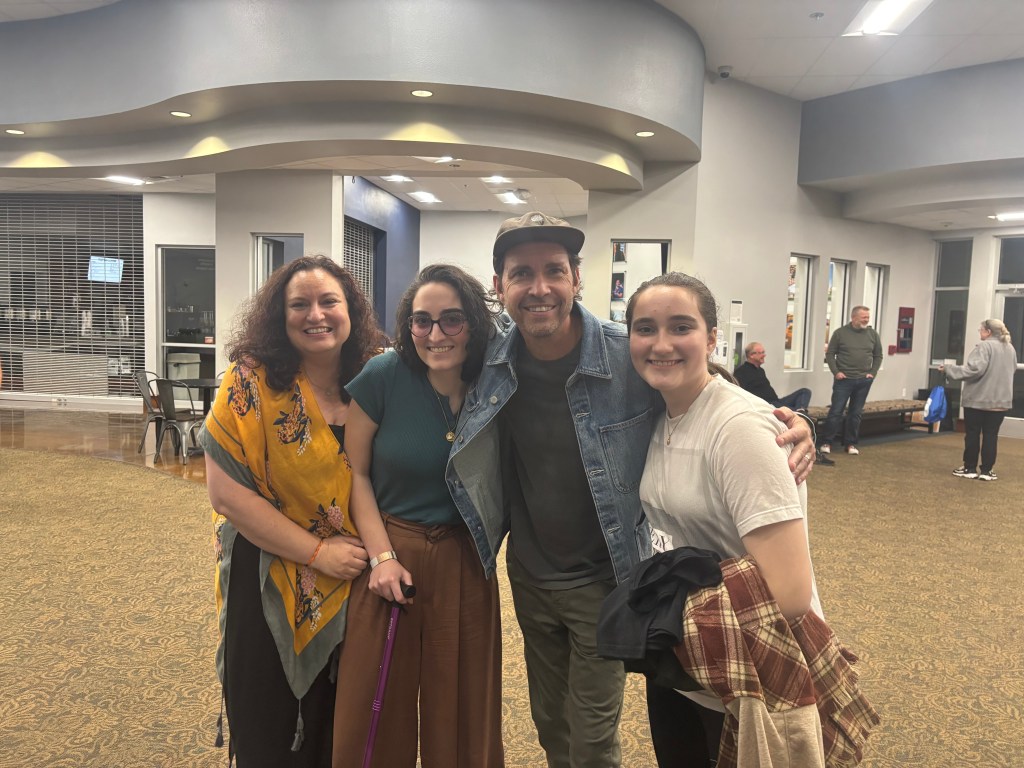
Recently, I went to a concert and did my usual concert preparations by googling all the artists and listening to their music. I found a song that hit so close to my heart that I had to pause it and breathe. It beautifully and hauntingly articulates the sorrow and grief of loss. The struggle of believing, but lamenting the loss. The song is called, “Nowhere to Be Found,” by Australian Christian singer/songwriter Nathan Tasker. After the concert we were able to meet Nathan Tasker and talk with him about his song and the impact its made on me and my family.
I took a fall with no safety net I felt my face hit the ground After a second to catch my breath I felt you kick me when I was down
Losing a loved one is hard enough Three pushed it over the edge So I carried the footprints of my daughter and son To the place where they say you live
But you were nowhere to be found Nowhere to be found
When the long line of dinners came to an end We made a meal of our own Out of cold habit we both bowed our heads And felt the silence of our home
Where you were nowhere to be found Nowhere to be found Nowhere to be found
Am I not shouting loud enough? Is there more than the top of my lungs? Oh I used to feel your love Where has it gone? Nowhere to be found
Now I look at the world like a crystal ball Usually from the outside in I see people I love get the life that I lost And I try to be happy for them But it feels like a town unacquainted with grief Protected like a child in the womb Oh but looking for you hanging around on those streets Is like looking in your tomb
Where you were nowhere to be found Nowhere to be found Nowhere to be found Nowhere
This song says everything I can’t. The parts of my grief that I am still processing and don’t have the words to describe. The doubts of where is God in all of this? The pain of watching those you love move on while you feel stuck and hollow. I love the part of feeling like you’re in a town acquainted with grief and the comparison of how looking for Jesus there is like looking in His tomb, where He was nowhere to be found.
There’s still an empty tomb and there’s still joy and new mercies that come in the morning. That is the pattern of lament. You address God, issue a complaint, a request, and then an expression of praise or trust in Him. We pour out our hearts – all our grief, anger, and sadness- to our God who listens and cares. We turn to him in our sorrow and then conclude with the hope of what we know is true of Him and His character. Lament turns us towards God while our grief and sorrow tries to pull us away. But, we know that God loves us and this life and its troubles are not the end for us.
Hello friends! I have a HUGE development and potentially a chance at a major reduction of symptoms and a huge improvement in my quality of life.
I’m sorry for the delayed update. For a while everything was just the same. There wasn’t anything new to report. I was in and out of the hospital a bit and on and off bed rest. I didn’t want to share all of the negatives. But, no big developments…until recently. Now I am totally off bed rest and working on clear goals.
This is going to be a story.
Bear with me, because of my storytelling skills and it gets a little dense…
Back in the summer of 2020, before my diagnosis of Chiari Malformation and then brain surgery, the first thing my primary care suspected was a condition called POTS.
From the Cleveland Clinic:
“Postural orthostatic tachycardia syndrome (POTS) is a condition that causes your heart to beat faster than normal when you transition from sitting or lying down to standing up. It’s a type of orthostatic intolerance.
Each word of “postural orthostatic tachycardia syndrome” has a meaning:
Postural: Related to the position of your body. Orthostatic: Related to standing upright. Tachycardia: A heart rate over 100 beats per minute. Syndrome: A group of symptoms that happen together.”
“When we stand, gravity pulls more blood into the lower half of the body. In a healthy person, to ensure that a sufficient amount of blood reaches the brain, the body activates several nervous system responses. One such response is releasing hormones that help tighten blood vessels and cause a modest increase in heart rate. This leads to better blood flow to the heart and brain. Once the brain is receiving enough blood and oxygen, these nervous system responses settle back to normal.
In people with POTS, for unclear reasons that may differ from person to person, the blood vessels don’t respond efficiently to the signal to tighten. As a result, the longer you are upright, the more blood pools in the lower half of your body. This leads to not enough blood returning to the brain, which can be felt as lightheadedness (faintness), brain fog and fatigue. As the nervous system continues to release epinephrine and norepinephrine to tighten the blood vessels, the heart rate increases further. This may cause shakiness, forceful or skipped heartbeats, and chest pain.”
I had many symptoms at the time, but it only addressed about 40-50% of my full symptom list. That was enough for my doctor to want me to be aware of it. Then I went off to school, got diagnosed with Chiari, moved back home and had surgery. So in my mind POTS was off the table and not something I thought about very often because many of the symptoms overlap with Chiari. I have so many commodities, it’s impossible to pinpoint each symptom to the cause.
Since the second brain surgery in January 2024, I’ve been hit hard with lots of escalating symptoms. For example, when I stand my vision goes completely black and I feel very faint and will have to sit down or lie on the floor. It’ll happen even if I’m lying down and just shift to a sitting position. I’ve not been able to eat much, been very sound and light sensitive, my skin and eyes have been really dry, my bp is low, I am short of breath when I am not doing anything, and lots of brain fog and fatigue.
A few weeks ago I met with a pain doctor (my request, I was so desperate for relief and thought they could help with medical massages or things like that) and it went as bad as it possibly could. He told me it was a psychological problem and that I probably didn’t need the first surgery to begin with. He focused on the notes from the initial neurosurgeon in Seattle who wouldn’t do the surgery and told me not to get a second opinion. He didn’t seem to be very familiar with Chiari, so he talked about anything but Chiari.
When this pain doctor first walked into the room, he made some “jokes” that just didn’t sit right with me. About how thick my file was for someone so young and how confusing it was…hahaha. He said he was confused, so I must be too. Then he said that my problem is because of the syrinx (a fluid collection, like a cyst) in my spine and the patch in the lining around my brain is probably leaking and that I probably need a blood patch. If that’s the cause my symptoms would be different and I would probably need another brain surgery. Now, for those with Chiari and who have had brain/neck surgery you don’t want to mess with your spine like that without good reason and clear evidence. I’ve become very cautious with doctors who just want to poke and prod and throw a diagnosis at the wall to see if it sticks or to save time.
He also did an assessment and said I meet the criteria for EDS (Elhers Danlos Syndrome), but that no insurance would pay for a diagnosis. I’m not sure what “pay for a diagnosis” even means. EDS is something that comes up a lot. There is definitely is a crossover with Chiari Malformation and some of my other comorbidities, but I don’t meet all the criteria. The evaluation the doctor was using was an outdated and incorrect method of testing. I am very hypermobile and fit those boxes, but you can be hypermobile without having EDS. He also saw my referral for genetic testing and told me that there was no way I would qualify for that and that if I wanted to buy a diagnosis then it would need to be out of pocket. I felt completely misunderstood. I am trying to get diagnoses removed and looking for clarity, not to add anything.
I am not going back to him.
That same week I met with a geneticist who he took my history, reviewed my symptoms and decided I qualified for genetic testing. He also initiated an EDS assessment, but didn’t think I met the criteria for EDS. He said there are other types of hyper mobility conditions.
There are four ways the genetics test can go:
Nothing comes back.
One or more gene mutations.
A gene is flagged as a mutation, but there’s not any information on it and it’s unclear if it’s symptom causing.
Nothing comes back now, but as science keeps progressing and evolving something could be flagged in the future. It’s more for information gathering at this point for the future.
There are still so many unknown genes and information surrounding genetic testing.
Later that week I was sharing with a friend, who has POTS, what happened. She told me about Western States University and their POTS clinic, she shared they had really helped her get her POTS symptoms under control. She suggested we call right then and see about getting an evaluation appointment. This was on a Friday and I got in on the following Tuesday. I was stunned at how quick I was able to schedule an appointment.
We were there for five hours for the assessment. It began with a very thorough medical history, a neurocognitive assessment, a neurological assessment, an EDS assessment, and then a NASA Lean Test. One of the issues I’ve been having is getting a formal POTS diagnosis, because there is no one my primary doctor knew of in our area doing a tilt table test, which is what it sounds like and is the common diagnostic tool. There is a doctor at OHSU, but her waitlist is seven years long. The NASA test is a version of the tilt table test that NASA developed because for some reason all astronauts have come back from space with POTS. The NASA test is over 50 years old.
For the NASA test I wore a heart monitor and laid in a dark room with no talking or noise for 15 mins so that we could get a baseline of my heart rate, 66 beats per minute (bpm). Then I leaned against the wall with just my shoulders touching and my feet about a foot from the wall. Over the next eight minutes, while I stood there quietly and without moving, my heart rate jumped up an additional 76 bpm to 142 bpm and continued climbing. I couldn’t feel my heart rate climb, I just felt a little nausea and some mild dizziness.
I was not feeling very “symptomatic” that day, it was actually my best day in weeks and I was worried the testing would not capture whatever was happening to me. That was not the case. 😂 They cut the test two minutes early and instructed me to lay on the table so my heart rate could come down to normal. Then I was led to a room to talk with Dr. Bill Moreau.
Dr. Moreau did something that no other doctor has done before. He told me he was going to tell my story back to me from what he understood and he wanted me to correct him where he was wrong. He began from when I first started getting symptoms at 15 and went all the way up to now. He had the full picture and understanding that no other doctor I have met with has been able to grasp and understand. I was floored by his insights into the different phenomena I’ve experienced with my body. He explained things to me that I had even stopped bringing up to doctors because they just kind of stare at me and move on.
The reason why he understands so much is because he is a researcher and Sports Medicine doctor who runs a Concussion Clinic. He was part of the NFL International Think Tank on Concussion Research that changed the way concussions are treated. He was also the Vice President of Sports Medicine at the United States Olympic Committee for ten years.
Brain surgery (surprisingly…) counts as a brain injury (mild traumatic brain injury)(mTBI) )along with the actual compression of my brain for who knows how long. It honestly seems like such a simple solution and kind of obvious to be treated as having a brain injury, but for some reason that hasn’t been the case. I have no idea why no one has approached my case through a brain injury lens, but it makes sense and it has opened a whole new world of recovery to me. It is a huge answer to prayer.
Dr. Moreau diagnosed me with Dysautonomia, POTS is a branch of that. Some people develop Dysautonomia after a brain injury. 1 in 5000 people have it. He explained that research on it is moving from the fringe of science towards the middle because so many people have developed it as a result of Long Covid. He told me it is not in my head and that the symptoms they are measuring are things like my heart rate that I have no control over. He said it is impossible for me to make my heart rate jump like that. I know that, but it felt really good to hear it from a doctor. He shared that he isn’t going to be going off of my feelings, he is going to be working with measurable criteria. He used a computer analogy. He said that my processor and memory are working, but the CPU is broken. They will help my brain rebuild the pathways between the two.
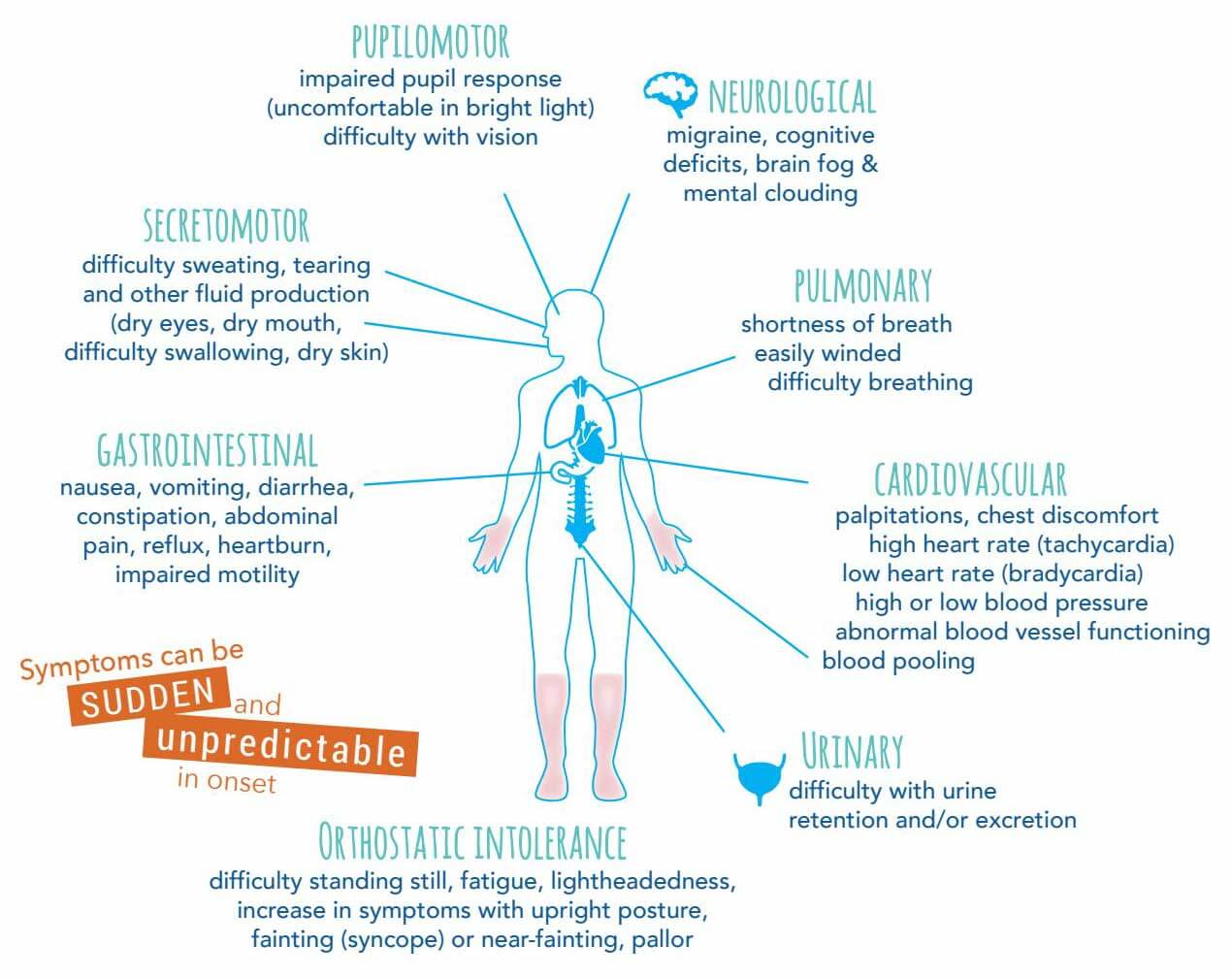
Dysautonomia is the missing piece that contains a reason for all of the random symptoms I have been experiencing that my doctors have been struggling to understand. This chart captures most of it, it is just missing sleep.
“Dysautonomia is a nervous system disorder that disrupts autonomic body processes. These are automatic functions like your blood pressure and heart rate. Having dysautonomia means these functions don’t work properly, causing disruptive symptoms. These symptoms are often manageable, but diagnosing and treating dysautonomia is sometimes difficult.”
He also asked me to be part of a POTS study to show the need for active interventions (PT) so your brain can heal. I agreed. The idea is to create new neural pathways and to teach my brain how to not freak out when I move.
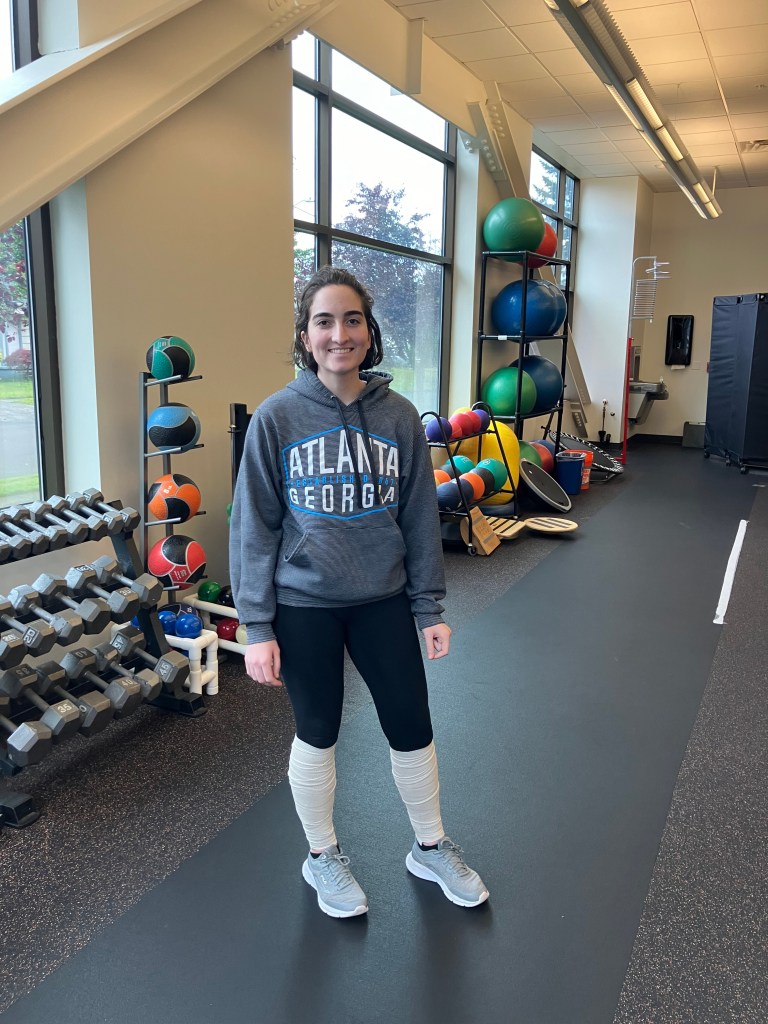
So, I’ve started this protocol where I go twice a week. My calves are wrapped with 6″ ace bandages for compression and I wear a heart monitor. I work one on one with a resident who leads me through a series of exercises for 60-90 minutes. The first two weeks are supposed to be the hardest as your body adjusts and your brain is pushed.
The other big thing the doctor recommended is getting prism glasses. He could tell by looking at my eyes that they weren’t aligning correctly. He explained that if we were sitting side by side with our eyes closed we are both running at 100 horse power. When we open our eyes, I lose 40 horse power as my brain tries to compensate for the misalignment.
He referred me to Dr. Elizabeth Powers, a neuro ophthalmologist who specializes in helping people with brain injuries. I met with her and she again did a detailed history and a lot of testing. She explained that the Dysautonomia is causing my body to be stuck in fight or flight, so we have to work on calming my body down. I started wearing the prism glasses a few days ago. They are tinted a mango orange and I wear them over my contacts. Glasses with an orange tint block out blue light, which helps our bodies’ circadian rhythms get back on track easier and should help improve my sleep. I am still getting used to them because they are physically retraining my brain to see in a different way. I should notice a difference in 3-4 weeks.
Dr. Powers also recommended blue light therapy for my eyes. She said that it will help to reset the biochemistry of my brain. It helps to reduce daytime drowsiness, brain fog and should help me sleep better. I am scheduled to start that next month.
I’m also still working with an Occupational Therapist, who is helping me with things like time management. We made a binder where I can visually see the days and my activities with places for notes. We’re putting together a tool box too with things like grips for helping me hold my pens and various ear plugs to help with sound sensitivity.
I’m still doing physical therapy for balance and mobility with the physical therapist who I’ve been working with for almost three years now. She is amazing and has been a key part of my team on this journey. There is also speech therapy and strain counter-strain therapy to help with overall pain relief.
There are still many symptoms I’m struggling with and some days are better than others, but I’m learning to manage it. I’ve made a bag I carry with me filled with ice packs, ear plugs, electrolytes, vomit bags, ginger drops, and anything else that might help me when I’m out and about, going to appointments and trying to live my life.
The hope is this clinic will be able to help me. I should know in two to three months if my body is responding or not. If I am a “responder,” then I will continue with the Moreau Protocol for the next 1-2 years. There are no guarantees, but hope that I will eventually be able to drive again and go back to school.
Prayer points:
Endurance I’m feeling exhausted. This protocol is a lot of work and I’m tired. I’m in my second week now and some days my symptoms and head pressure are bad and I lay down with an ice cap on my head. I also go to the other therapies, so next week there are five appointments.
Response Please pray that my body responds to this therapy and that I can enter into the long term treatment phase.
Hope It’s still a lot to process and I feel excited, but also a little bit of some “tempered hope” as it was said to me. I’m trying really hard to keep going and to be hopeful but at the same time there’s a part of me that doesn’t want to hope too much. I don’t want to get my hopes up too high like I did for my first surgery. It’s mentally exhausting.
Trust Going back to looking at the way I ended up at the clinic and how fast I got in with them and then quickly in with the neuro optometrist and I’ve already received the glasses two weeks earlier than expected, it’s clear God has a hand in this.
My mom took me to see one of my favorite bands, Cain and they sang a new song called, “Wings.” I thought it was funny because when you look up POTS and Dysautonomia memes there’s sayings about being “allergic to gravity.” “Wings” is a new song about feeling heavy and having troubled times always trying to bring you down. Then about how we’re gonna fly with wings like eagles because “gravity” has no grip and then to soar to new horizons.
Thank you all so much for your continued prayers and support. This is a long journey and I am glad I am not doing it alone.
God bless,
Shae
This is my song for this next season.
"Wings" by Cain
“Heavy days, heavy heart, got that heavy burden Weighing on my shoulders now Troubled times, troubled mind, got that troubled feeling Always tries to bring me down
The world can wait 'cause I'm gonna wait on You I feel my spirit lifting when I do
I'm gonna fly with wings like eagles Soar high above it all Gonna rise to a new horizon Yeah, watch my worries fall Gravity ain't got no grip on me 'Cause I've got wings Oh, you know I've got wings, yeah Oh woah
I might be down here, feet stuck on the ground here But You keep my head above the clouds All of the problems, way too big to solve 'em Are so much smaller looking down 'Cause only You can change my point of view I feel my spirit lifting when You do Oh-oh I'm gonna fly with wings like eagles Soar high above it all Gonna rise to a new horizon Yeah, watch my worries fall Gravity ain't got no grip on me 'Cause I've got wings
Yeah, I've got wings Oh woah Mmm
Here we go
I feel the roof coming off of this place Coming off of this place I feel your spirit renewing my strength Yes, Lord I can hear heaven is calling my name Yeah, yeah
And I feel the roof coming off of this place, yeah And I'm gonna fly with wings like eagles Soar high above it all Gonna rise to a new horizon Yeah, watch my worries fall Hey Gravity ain't got no grip on me Oh yeah, oh yeah 'Cause I've got wings
I’m home now since Thursday night. Thank you all for the constant prayers and the steady support and love.
I’m exhausted and have been sleeping most of the days away. My body physically feels worn. It’s hard to move, but I’m making myself go up a flight of stairs and just want to walk around. Some days are easier than others. If I lay still with an ice pack and some meds I can manage. It’s the moving around part that’s hard.
Isla has been so gracious and is letting me sleep in her room in the lowest level of the house, my room is on the highest floor. Which freaked out everyone (including the medical team).
A few family and friends have briefly stopped by, but I am mostly sleeping. I don’t actually remember all the details of my first surgery, but I really don’t remember sleeping like this.
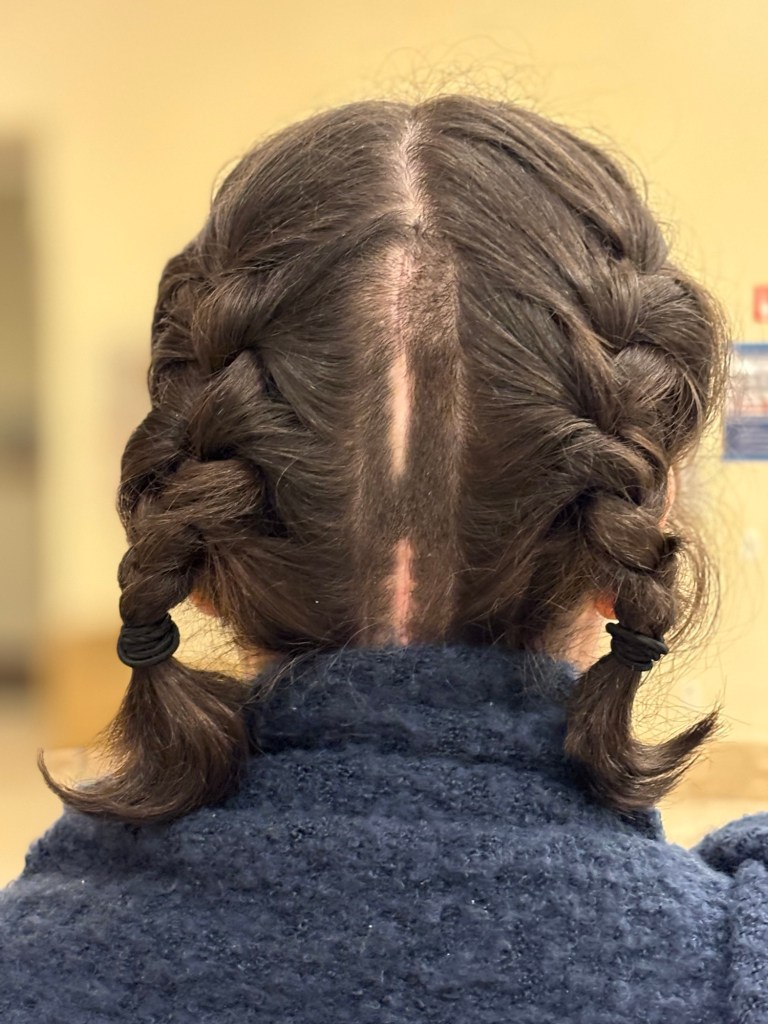
I have to wash my hair and incision every day with this baby wash type thing. One of the nurses told me to be prepared that I am going to lose some hair in the coming months from the medication and my body being under stress. That happened last time, so I’m ready for that. I already cut my hair shorter so it’s easier to manage and grow out.
I saw my primary care doctor yesterday. My incision is a little swollen, but we’ll just watch it for now.
I made a playlist of everyone’s suggestions and I play it all through the night. It’s very eclectic and lots of it is new to me and gives me lots to think about.


 Weathering Chiari